
Space Requirements of the Living Operator
2026
about the piece
Space Requirements of the Living Operator” is based on the 2024 research paper “The Cadaver in the Machine.” Written by researchers from Cornell University and other institutions, the study serves as both a metaphor and a scientific critique of how deeply rooted, biased assumptions about the human body are embedded in modern technologies. At its core is the 1955 study “Space Requirements of the Seated Operator” by scientist Wilfred Taylor Dempster, which extensively documents early research into the human body and its mathematical modelling. It relied heavily on the dissection and measurement of deep-frozen body parts from white, athletic male cadavers. These data also served as the gold standard for motion capture, leaving out women, people with other skin tones and body types, and people with disabilities, among others.
The experimental CGI video work “Space Requirements of the Living Operator” stages the symbolic struggle of these forgotten and excluded body types. Some of the earliest freely available motion capture data from Carnegie Mellon University were used as the basis for movement, supplemented by complex soft-body and muscle simulations. In doing so, the work breaks apart the rigid historical “gold standard,” bringing the suppressed organic dimension back into the machine.
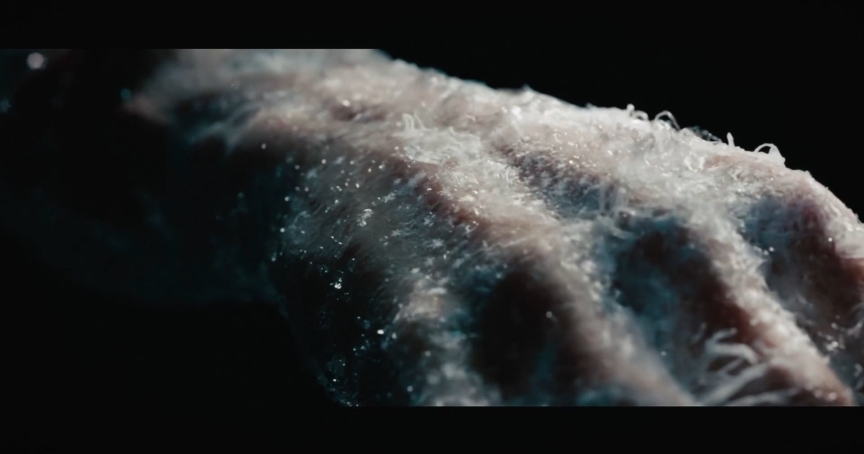
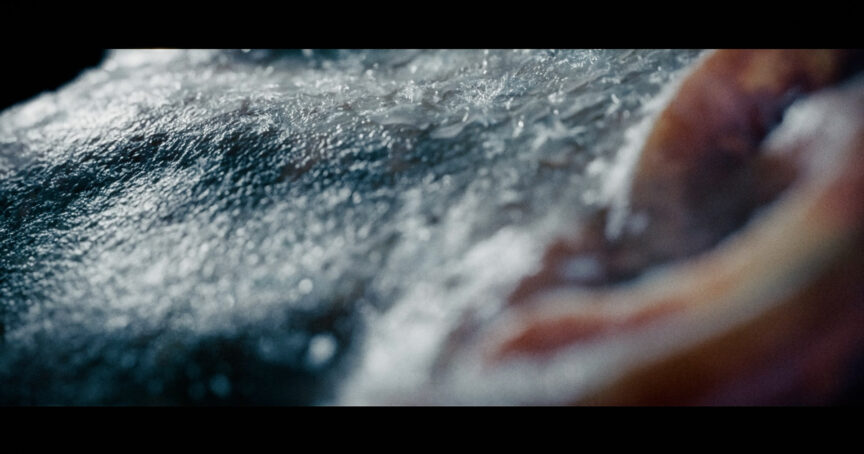
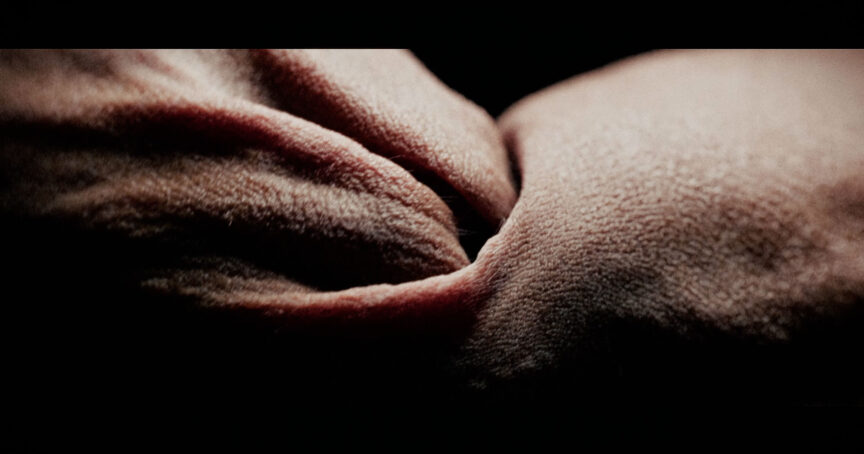
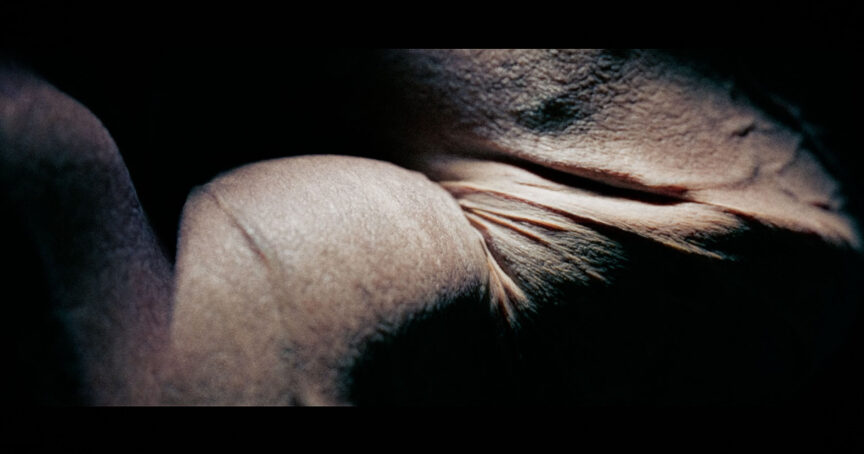
Visually, this process unfolds through extreme close-ups of skin and bodily landscapes. All 3D models and textures were created from scratch using digital sculpting and a combination of procedural techniques.
The sound design combines noises from the human body—from cracking joints to the brushing of skin—with electronic sounds. The organic sounds were digitally manipulated, distorted, and woven into an original soundtrack composed specifically for the work.
The video’s dramaturgy follows a three-part structure. Initially, the focus is on the frozen, white skin of the historical model. In the second part, the organic mass begins to free itself, before the bodies finally break out of the old standards following an explosive, symbolic struggle.
videos
credits
Concept & Development: Bernd Kopf | Project Concept: The Cadaver in the Machine — Christoph Winkler
A production by Company Christoph Winkler.
Funded by the Berlin Senate Department for Culture and Social Cohesion and by Fonds Darstellende Künste with funds from the Federal Government Commissioner for Culture and the Media.
Categories
Productions
-

 A Faster-than-Light Sketch
-
OLUBUGO
-
Wettergeschichten
-
Alternative Evolutions
-
Thieves From Heaven
-
Space Requirements of the Living Operator
-
Whispers of Wood
-
ANT
-
Where The Wild Might Be
-
Twaliwo
-
Four Non Blondes
-
Digital Development Project
-
Magic Songs
-
Songs & Dances about the Weather
-
OKUBULA KWA BALAFU [eng. On the Disappearance of the Glaciers]
-
We Are Going To Mars – a choreographic concert
-
Radical Minimal
-
Scores for the Virtual
-
Stay On It – Dance Film
-
COME OUT
-
Coming Together
-
Stay On It
-
We are going to Mars | and we’ll unite the galaxies
-
A Beginner’s Guide To Worldbuilding
-
We are going to Mars | Suite |
-
Faces
-
Looking at Shirley – MoCap Research Project
-
Mapping Environmental Dance
-
Illness as Practice
-
What If
-
Berlinballett | T-Shirts
-
ENVIRONMENTAL DANCES
-
It’s all forgotten now
-
Her Noise
-
African Minimal
-
On Hela
-
A Hey A Ma Ma Ma
-
The Voice That You Are
-
Fan Fic Festival
-
Speak Boldly: The Julius Eastman Dance Project
-
Shut up and dance
-
Boards that Mean the World / Embawo Ezitegeza Ens
-
Ernest Berk: The Complete Expressionist
-
Routines – Good Kids Don’t Dance
-
Black Cyborg
-
Le Roi David
-
Crossing Half of China to Sleep with You
-
Sheroes
-
Studies on Post-Colonialism
-
The Lion and the Dragon
-
The Goldberg Variations – Dancing Like A White Guy
-
Can Asians Dance?
-
Seeing Alvin Ailey
-
Persian Hair
-
The Witch Dance Project
-
Urban Soul Café
-
Lost my choreographer on the way to the dressing room
-
What is African contemporary
-
Golden Stars on Blue
-
La Fille
-
BerlinBallett | “Steps” and “Dirty Dancing”
-
BERLINBALLETT | YOUR DANCE
-
BERLINBALLETT | MASHUPS
-
Lead Role
-
Abendliche Tänze
-
Dance is Not Enough
-
RechtsRadikal
-
Dance!Copy!Right?
-
Maldoror
-
Baader – A Choreography of Radicalization
-
Evil Bodies
-
Taking Steps
-
True Style
-
Ride On Time
-
Toronto Files
-
Biopics
-
A Taste of Ra
-
Eine Geschichte (A Story)
-
Saal A
-
Zwei zu Null
-
Posed
-
Tales of the Funky
-
ChoreOdyssee
-
BERLIN GOGOS
-
We are time
-
Who by fire
-
Charly Bagdad
-
Routines
-
The Last Duet
-
Lazarus Sign
-
Triple Bill
-
Homo Sacer
-
Politik braucht keinen Feind
-
They Died for Beauty
-
A White Leaf
-
The Long Song
-
Sexuality and Truth
-
Behind the Lines
-
Jerusalem
-
Lebenslang
-
Fatal Attractions
-
Apparat
-
Lavinias Traum
-
Fatal Attractions Version 1 TRIO
-
Berst
-
Berst Solo
-
Othello as a Noise Opera
-
The Wandering Problem
-
F.A.Q.
-
NAHT
-
Studies
-
Firebird Project Solo one
-
Firebird Project Solo two
-
Firebird Project Solo tree
-
Nocturne
-
Stumbling in the HighTechPool
-
Face L Alarme
-
Ulrich und Agathe
-
Morgenrot